


Most warehouses feel manageable at low volume. A team can rely on experience, memory, and a few manual workarounds to keep orders flowing. Then volume grows, SKU count grows, and more forklifts, people, totes, and orders are moving at the same time. Suddenly, operations feel unstable.
The reason is simple: warehouse complexity does not grow in a straight line. It grows exponentially as movement increases.
More movement means many more interactions
If one item moves through receiving, putaway, replenishment, picking, packing, and shipping, that is one clean flow.
But once thousands of items move through those same steps at once, each move has to compete for:
- Space in aisles and staging zones
- Equipment like forklifts and conveyors
- Labor availability by shift and skill
- System attention for scanning, validation, and exception handling
Each new movement adds not just one more task, but many new points of interaction with everything else already in motion.
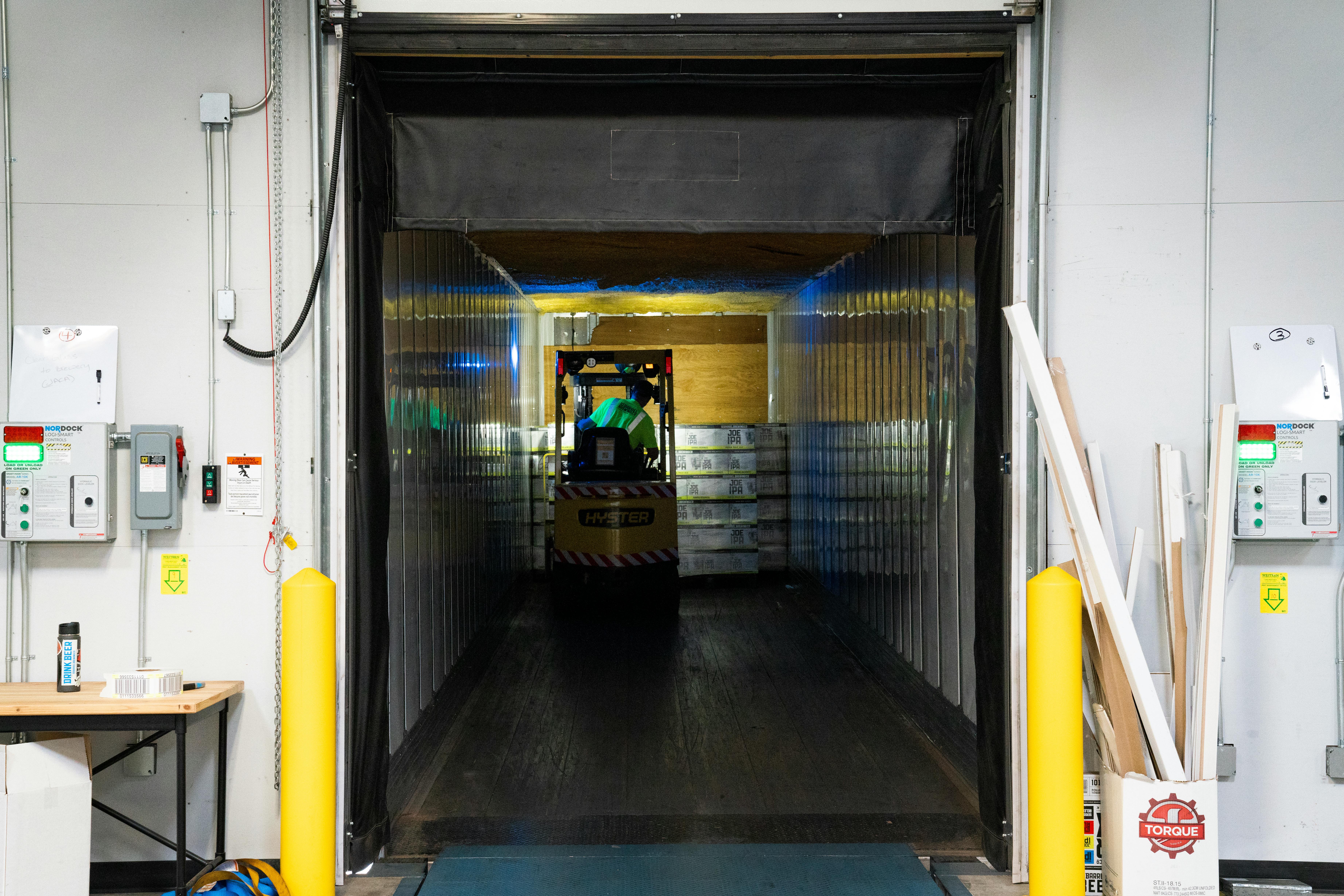
Why complexity can feel exponential
A useful mental model is this: if you double the number of moving things, you often more than double the possible conflicts.
That includes:
- Path conflicts in high-traffic zones
- Slotting conflicts between fast and slow movers
- Priority conflicts between urgent and standard orders
- Inventory state conflicts caused by delayed or missed scans
At low throughput, these conflicts are occasional. At high throughput, they stack on top of each other. A small delay in one zone can trigger queueing in several others. That is why performance can fall off a cliff even when demand only increased "a bit."
The hidden multiplier: variability
Two warehouses can process the same order volume and still have very different complexity.
What changes the complexity level most is variability:
- More SKUs with different handling rules
- More order profiles (single-line, multi-line, pallet, parcel)
- More service levels and cut-off times
- More inbound uncertainty from suppliers and carriers
Variability multiplies movement complexity because each move now has more possible paths and more ways to fail.
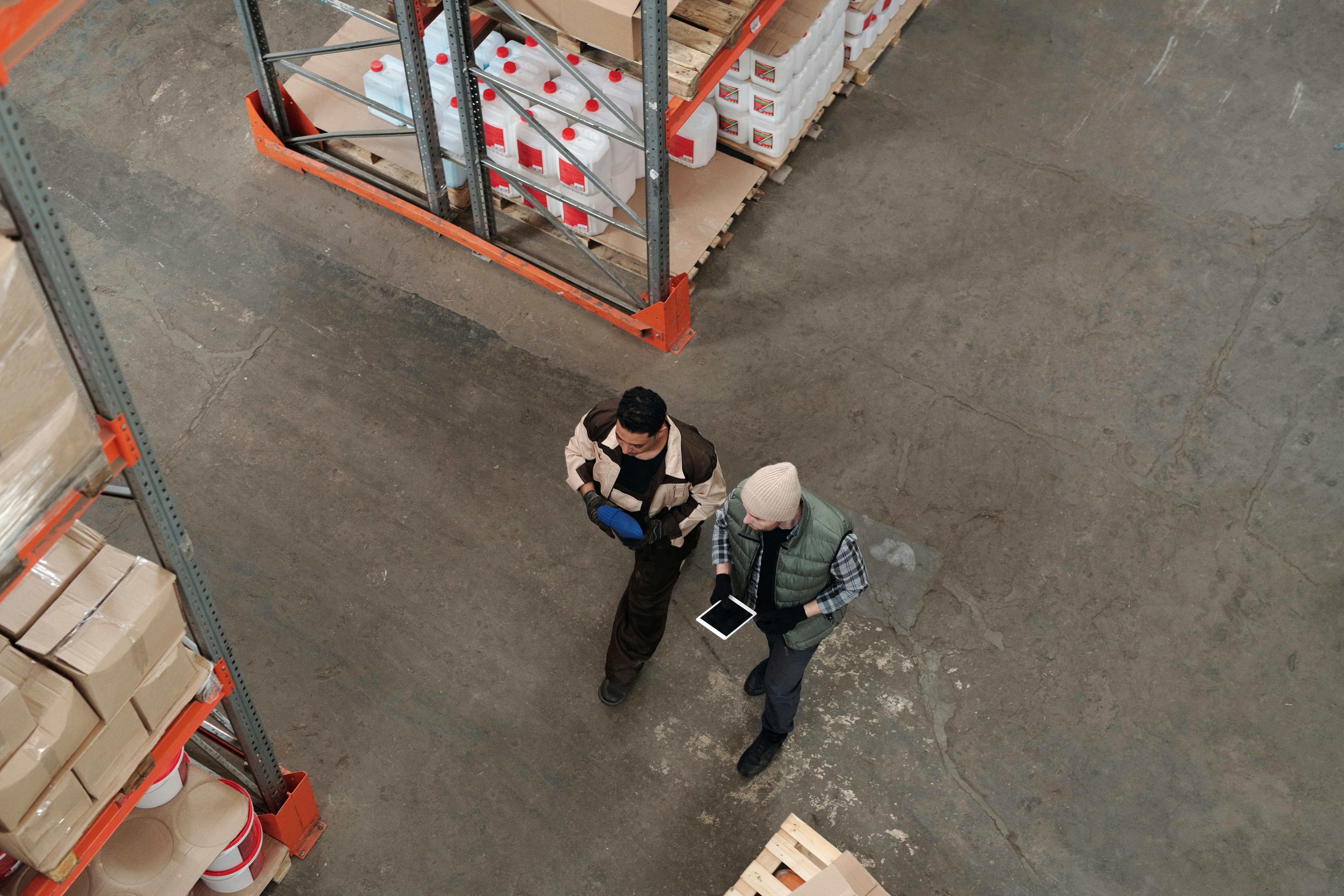
What growing teams usually experience
As complexity rises, the same symptoms appear in most operations:
- Travel time grows faster than picked lines
- Replenishment keeps arriving slightly too late
- Exception queues expand every hour
- Inventory accuracy drifts during peak windows
- Managers spend more time firefighting than improving
These are not just "busy season problems." They are signs that the system design has not kept pace with movement complexity.
The value of a good WMS in high-complexity warehouses
A good Warehouse Management System (WMS) is one of the most effective ways to control complexity before it becomes chaos.
As movement volume rises, a strong WMS helps by:
- Creating real-time inventory truth, so teams stop making decisions on stale data
- Orchestrating task priorities, so urgent work is clear and bottlenecks are reduced
- Guiding optimal pick paths, so travel time does not grow as fast as order volume
- Enforcing scan checkpoints, so errors are caught early instead of downstream
- Standardizing exception handling, so issues are resolved consistently across shifts
In short, a good WMS does not remove complexity, but it makes complexity manageable and predictable.

How to stay ahead of complexity
You cannot eliminate complexity, but you can design for it.
-
Reduce unnecessary touches: Every extra handoff adds coordination cost. Remove non-value moves first.
-
Separate flow types: Keep fast, predictable flows away from slow, variable ones so problems do not spread.
-
Strengthen real-time visibility: Use disciplined scan events and live operational dashboards so delays are visible early.
-
Re-slot continuously: As demand shifts, location strategy must shift too. Static slotting quickly becomes a bottleneck.
-
Treat exceptions as a process, not an afterthought: Define ownership, response times, and escalation paths before peaks hit.
Final takeaway
Warehouse growth is not only a question of "how much more volume" you can handle. It is a question of how many simultaneous interactions your operation can coordinate without breaking.
When movement increases, complexity grows exponentially. Teams that recognize this early can redesign flows, tooling, and decision-making before operations become fragile.